Archive for the ‘Books’ Category
Douglas Stuart’s “Shuggie Bain”
The moment I finished Shuggie Bain, I tried reaching out to the few people I know who care about reading. I wanted to tell them, “Quick, here, go, read this book”. I did not stop until one friend responded back with, “OK, but what did you like about the book so much?”.
My friend had asked me an honest, curious question – she was not trying to stop me in my tracks. Though, it did make me stop and wonder: Exactly what was it that I loved about this book so much? That is the problem with this book: how do you recommend such a depressing book to anyone? I think, the only apt description I have been able to do is: depressing, sad yet beautiful.
The story is based in 80s Glasgow and truthfully, I had no idea about the socioeconomic conditions in Scotland (or the UK) at that time. I made no attempt to educate myself about it. My only connection with Scotland is a band called “Texas”, led by a wonderful woman called Sharleen Spiteri (on whom I have seriously considered naming my daughters).
This is a story about Agnes, Shuggie’s mother as much as it is about Shuggie. It is a story of Agnes’ alcoholism as much as it is about Shuggie’s devotion to Agnes.
Shuggie is introduced to us as a fifteen year old, living alone in a boarding house in Glasgow. The story then goes back to the early 80s when Shuggie is five, and moves on from there. Shuggie grows as a child, witnessing his mother’s growing dependency on alcohol. Amidst all of this, Shuggie is trying to understand his own conflicted self, as he is gay. But, despite everything, Shuggie’s devotion to his mother is solid as a rock.
However simplistic it may sound, the characters of this story are anything but that. These are complex characters in the story and it is inevitable that most of them are based on real life – the primary two characters (Agnes and Shuggie) based on the author’s mother and the author himself.
Douglas Stuart spent 10 years writing this and his prose flows seamlessly. The manuscript was rejected by over 30 (!) publishers. In an interview, Douglas said that a few publishers who rejected this knew exactly that this book was a winner but had no idea how to sell this book to the American audience. It’s a shame really – I grew up in India and had no idea about the socioeconomic situation in 1980s Scotland and yet, could connect so well with this book. I think, maybe, these book publishers do not know their audience so well, after all.
While reading this book and seeing the characters grow, I had a strong enough feeling that this isn’t going to end so well. It isn’t like you are rooting for Agnes or Shuggie. One of the many things I loved about this book was how carefully Douglas handled these characters. For example, as Shuggie is growing up, he understands that he is not like normal boys (since he is gay). He is bullied by other boys and does everything to be “normal”, but the author never lets that overpower the overall narrative of the book. Yes, Shuggie has problems with identifying with his sexuality but Shuggie also had even bigger problems – he was practically guarding his mother every-time she spiraled into the deeper pits of various kinds of alcohol.
So, overall, a very touching book – something that will remain with me for a very long time. It is the kind of book that has kept me thinking days after I have put it down. And I am still pinging people and telling him, “Quick, here, go, read this book”.
On “The Deoliwallahs”
Before I write anything about “The Deoliwallahs”, I should mention that one of the co-authors of the book, Dilip D’Souza is a good friend of mine. I have read a lot of his writing, right from his reddif.com days.
“The Deoliwallahs” is a book about how 3000 Chinese Indians were locked up in an internment camp in Deoli, in 1962, during the Sino-Indian war. It is a collection of stories about how the lives of these Indian citizens were uprooted and could never get back to normal. These stories have never been told before, for reasons that we come to know in the book.
I first came to know about the Deoli internment camp back in 2012, when Dilip wrote about it for The Caravan magazine. I remember reading the longform article in a single go, on a cab ride through Bangalore. So, when I started reading this book, I had some idea about what lay ahead and how difficult read it may turn out to be.
Through the memoirs of the survivors who have now chosen to speak out about the camp, one gets a first hand account of how the Indian state failed its citizens. These are stories about how families were broken, kept years apart, childhoods lost and lives uprooted. The Chinese Indians were Indian citizens, many of them for three or four generations and were mostly doing well in their lives. Many accounts talk about how the police one day knocked on their doors, gave them a few minutes to pack their belongings and sent to the local jails for a few days. From there, they were then sent on a four day long train journey into the desert, at Deoli, where many spent the next four-five years of their lives. The war lasted 31 days.
There are stories about the train journey. The train had to stop in middle of nowhere to cook food, because it could not stop in towns and villages as people hurled stones on the Chinese Indian passengers. How did the villagers know that this train was carrying Chinese Indians? Someone had written “Enemy train” outside the compartments of the train. Meanwhile, a woman gave birth to a child during the four day train journey.
The stories do not start with the camp or end there. These families who spent many years at the camp were left to pick the pieces of their shattered lives. They went back to their towns and villages to find their property looted, assets stolen and facing humiliation. Many of them never spoke about what happened because they felt maybe it was too dangerous and did not want any more trouble. Decades later, they spent their lives in the fear that there may be ‘that’ knock again until many of them eventually migrated to countries like Canada or The United States.
While reading this book, I kept wondering about what made these people speak now. I mean, it has been 50 years since this happened. Why now? I did try to get some answers but the one that stayed with me was Yeeva Cheng’s heartfelt story. In the book, Yeeva is mentioned as a 19 year old. She is the daughter of one of the survivors of the camp. Yeeva was raised in the US, so her western-eastern upbringing must have added to her perspectives. Here’s a little excerpt from the book, in her voice:
I started thinking more about why these people stayed silent for so long. It made me confront my own silence. I started to rethink how I carried myself in college or for that matter anywhere else I went, especially growing up in a small town in North Carolina. We carried ourselves very quietly, and if people pushed and bullied us in school, we didn’t say anything. It made me see that you have a choice, you can either stay silent and there are good reasons that you might do so, or you can choose to say something and push back
It made me aware that there’s this delicate balance, of Western values, of speaking up and being vocal, and Eastern ones, of being reflective, of recentring yourself.
So, there is no right and wrong answer here. There can’t be one. But this above is a perspective that we could do with. I started to think more on the lines that these people, they have been carrying this personal grief, these remenants of a personal tragedy and they should be simply allowed to do whatever they want with it.
Towards the end of the book is an essay by Dilip that only he could write. It is a chapter on the Citizenship Amendment Bill of 2016 that finds parallels with what happened with the Chinese Indian citizens in 1962. It is a scathing commentary on the how India continues to fail its own citizens on the basis of race, religion, looks, language, caste and what not.
I would end this writeup saying that this book is surely not an easy read but is yet an essential read. It is that part of Indian history that people should know about. Because this is not just a story that is 50 years old. The same hate that shaped us in 1962 is the hate that is shaping us now. And as Dilip says, this is the legacy of 1962 that we are left with.
Arundhati Roy’s Ministry of Utmost Happiness – my review
Somewhere towards the end of Arundhati Roy’s latest book, there is a paragraph about a cat that is found in a houseboat in Kashmir that is being raided by the Indian Army. The soldier grabs her and then throws it away in the dark waters below.
“She flew through the air, yowling, with her fangs bared and her little claws extended, ready to take on the entire Indian Army all by herself. She sank without a sound. That was the end of yet another bewakoof who did not know how to live in a mintree occupation.”
This para, for me, illustrates Roy’s anger and frustration with the Indian state, on display throughout the book, at its peak. That Roy does believe that an event like this – when an Indian soldier is heartless enough to throw a kitten into the depths of a lake, is plausible, sums everything that she feels about the Indian Army and the overall Indian state per-se.
Here in Australia I can see Roy is popular and her latest book has been given royal treatment by the few bookshops that remain here – by placing mountains of the hardbound at the entrances. If you have followed Roy’s non-fiction works and the state of India affairs over the past 10 years or so you will find this book to be predictable.
There is Godhra, there are the Gujarat riots, there is more than one reference to our current PM (“Gujarat ka Lalla”), the jantar mantar anti-corruption movement, Hazare, the list could go on.
I am not going to go into the characters of the story. To me, each character is eventually an extension of Roy’s own personality – I am not complaining, but maybe I am. The problem with this book is that since all the characters borrow the same narrative there is no one to defend Roy’s accusations. There is no “other side”. If you ask Roy, maybe she will say exactly that – there is no other side in our country. You are silenced if you have a viewpoint other than what the state wants you to have. It is an exaggerated point of view but to be fair to Roy, there is truth in that.
Throughout the book, there is so much anger and rage, you wonder where did Arundhati Roy get this from. As the book goes on, with every chapter, with every page, the rage reaches new heights and the hopelessness you feel as a reader, plunges to lower depths. It is like Roy has created a lake of anger and you are asked to drown in it.
But through its unrelenting narrative, Roy gives an insight into the life of Kashmir – a place mostly rendered opaque because of the single one-sided narrative of the media and the Government (depending on which country you are from). The words are powerful, the prose is rich as you’d expect from a writer of Roy’s prowess but well, it gets tiring.
There are always two sides to a story and I kept missing that other side here. I can imagine Roy asking me to read the newspapers and the mainstream media to get the other side — the “mainstream” view. But to me, that absence – that inability of the author to go outside her comfort zone and to try and be in someone else’s skin, to portray and to think like a character from the “mainstream” view is the undoing of this book. Maybe it has something to do with the fact that this is Arundhati Roy — The activist, writing the book.
On The Tales From Firozsha Baag
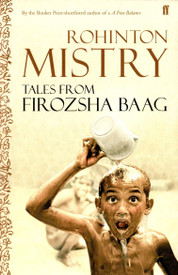
“A Fine Balance” by Rohinton Mistry is one of the finest (probably only surpassed by Rushdie’s Midnight’s Children) Indian literary novels ever. There have been very few books that have touched my heart as it did. I was new to Bangalore, in 2005 and was looking forward, with a book in hand, to getting lost in the myriad of lanes that the city had to offer.
A writer friend I constantly look up to, once suggested that “Tales from Firozsha Baag”, Mistry’s debut, was a great book and his personal favorite. I had the opportunity to read the book over the last couple of months. As it turns out, as debut books do, this one not only gives enough hints of the great writer that Mistry would turn out to be but it is a masterpiece in it’s own right. Here’s a small para I loved for the sheer prose of it, describing the Bombay local train scene in all it’s essence:
The suburban local was at the outskirts of Bombay; they would arrive at their destination in forty-five minutes. The ’17 Standees Allowed’ by the scratched and peeling sign had already been exceeded by the crush of Sunday morning commuters, but not to the extent of a weekday train: as yet, there were no roof-riders or window-clingers. In the sky the sun was higher than the when the train left Bombay Central. The heat began to strengthen rapidly now, seeming to feed on itself, growing more oppressive with every breath. From metal straps hung the standees, listless, upraised arms revealing identical damp patches under sleeves of shirts and blouses. Overhead, the fans turned ineffectively, whirring and rattling, their blades labouring with feeble rotations, trying to chop the air thick with heat and odour, scattering it around unelessly in the compartment.
The book is a collection of eleven short stories set in the 1980s about people living in a parsi colony in Bombay. The stories are intertwined while each story has a main subject/family and at least a few characters from other stories make appearances in each story.
As any good book would, this takes a little time to pick up even though the stories by themselves are distinct. But then again, with Mistry, it is not so much about the story but the beautiful prose that he weaves with his simple tools that comprise mostly of words. At times, the stories have an element of shock, but are mostly amusing and sometimes even funny but the common thread that binds them all is the pettiness that was the common ingredient that every middle class family in Bombay must have had in the 1980s — something I could relate to, for I grew up near Bombay at the same time and have seen the city at close quarters.
Consider for example, the story called Squatter in which Nariman Hansotia, a man popular with kids of Firozsha Baag for telling stories tells the story of an imaginary cricketer named Savukshaw, the greatest cricketer who played during the times of greats like Umrigar, Contractor and Farokh Engineer. Savukshaw, who gave up cricket for cycling, before he became a pole-vaulter and then a hunter could never find happiness in his life. Eventually Mistry, with Nariman at his aide, tells us about Sarosh, living in Toronto for ten years and yet not being able to balance himself on the western commode. So Sarosh, throws himself a challenge and what follows is a funny account of an Indian immigrant’s life in the first world.
Or one could keep thinking about Lend Me Your Light, where the lives of three friends, one of them, the narrator, the other being his brother and the third, a friend, keep crossing each other’s at intervals. Nothing much would have come of it if only the three would not have spent their childhood together. The story depicts how, in the 1980s, the Indian Youth reacted to the hopelessness surrounding the times. But then again, it is not so much about the story but in this case, it is the difficult questions that Mistry asks his readers by way of the characters he beautifully crafts, at will. It is this rush of emotions that these subjects feel and you, the reader, would find yourself inevitably attracted to these viewpoints, almost agreeing to one of them, and maybe taking out time, thinking and answering these uncomfortable questions, looking out ways to possibly ensure that your well-thought of answers that you mumble quietly within the vicinity of your head are somewhere heard. It is what any well told story should do to you, and this one most certainly qualifies for one, as it continues to dwell, this story of three boys growing up to men, living in different lands — Toronto, New York and a small village in Maharashtra but returning home to Bombay with a different set of emotions each time.
Or maybe I could also talk about the last story, if I can call it that, because Swimming Lessons has distinctive details about the author’s own life (More on that later). Here Mistry goes back and forth between the central character of the story who grew up in Firozsha Baag but finds himself in a Toronto apartment while his parents wait for his letters in India. The Toronto version of events turn out to be about his daily experiences where he recounts his childhood with minute details while the events that happen with his parents (presumably set a little in the future) talk about letters that his parents keep receiving only to find, inevitably to his father’s disappointment, a standard paragraph on weather from their son in Toronto who refuses to divulge details about his daily life without asking any in return until one day they find that their son, in a clerical job with an insurance company in Toronto, is also a writer and has written a book of short stories on his childhood experiences of Firozsha Baag! (Mistry was a banker until he started writing in his late 20s/early 30s)
The story is a joy to read with segments of hopelessness coupled with antidotes on what could become a writer, coming from the father’s perspective who is much delighted now that his son has found his calling in writing. And now, with the way of his father’s dialogue, Mistry conveys to us some theories that are heartening to hear for any aspiring writer. Consider some excerpts:
all writers worked in the same way, they used their memories and experiences and made stories out of them, changing some things, adding some, imagining some, all writers were very good at remembering details of their lives.
And:
Father explained it takes a writer about ten years time after an experience before he is able to use it in his writing, it takes that long to be absorbed internally and understood, thought out and thought about, over and over gain, he haunts it and it haunts him if it is valuable enough, till the writer is comfortable with it to be able to use it as he wants; but this is only one theory I read somewhere, it may or may not be true.
Ah no, I am not much of a writer but I can see why I keep remembering the past so often. Maybe I miss it so much and that I try to relive the experience by writing about it and talking about it in fine detail, as much as I can, as much as I can afford and as long as I have an audience. Maybe I should start using my memories of growing up on an island near Bombay to good effect. Anyway.
So the stories go on but with Squatter, Lend Me Your Light and Swimming Lessons, Mistry saves the best for the last. I wish I could mention more stories but that would be telling too much. Like the taste of filter coffee, the stories linger on long after you are done reading it.
Following Fish – Samanth Subramanian
While I was in US, sometime last year, I read about Samanth Subramanian’s Following Fish at rediff.com. A few months ago, I bought the book, read it and decided to write about it. It is not a review per se, though it can pass for one. Does not matter — here, below, is what I wrote.
While I was reading Samanth Subramaniam’s Following Fish, I made a promise to myself –that I would write about this book no matter what. I would write, no matter what little voice my blog had, no matter what difference it made to the already formed opinion, no matter those already published reviews by famous publications. It is because Samanth’s idea – of going around India’s coast and writing about it, deserves applause and attention.
Perhaps, it would be better not to look at Samanth’s book entirely through the lens of a travelogue. This is not a comprehensive account of what he encountered while travelling the corners of India’s coastline. It is not about places to visit and coastlines to see. Anyway, 184 pages can’t be enough for that. Neither it is about the hidden gems, those unassuming places, to eat the best fish in various small towns. It is about how one of the oldest practices known to mankind, fishing, transforms lives.
The author starts with the east coast: in Calcutta, a commentary on the much prized Hilsa. His trysts in the fish market, early morning in Calcutta. On the way down, he, well, swallows a fish in Hyderabad while scrutinizing the asthma medicine that thousands swallow in a fish. This moves all the way to west, to Gujarat where Samanth investigates the art of crafting fishing boats.
While in Kerala, the author goes toddy hunting — how could he not? I mean, it’s a place where the fish, varieties of gravies and fries notwithstanding takes a backseat and becomes a sidekick to toddy – that peculiar liquor from Palm trees that is best served, yes, before noon. So our author goes exploring toddy and describes the best way to locate an authentic toddy shop that serves, well, authentic toddy (also included in the chapter is a guide to pronounce the toddy “shop” right). Whatever happened to fish? We don’t care!
Honestly, having traveled extensively through the west coast myself, I waited patiently until the pages turned and I found Samanth Subramanian in Mangalore. And with a very similar dilemma that I had when I first went there. Where to find the best Mangalore fish curry? And this is this other thing about the book — if you are a fish eater you’d end up eating more fish over the weekends. This could be a longshot but perhaps it is that writer-reader relationship that builds over the course of the book and the fish loving reader finds it delightful than ever to eat fish – the love for seafood now validated and justified by the author of the book himself.
And there are points where Samanth keeps me longing for a little more: Mangalore, Bombay – points in case. Because while writing about his experience in Bombay, perhaps the most telling of all, he cautiously flirts with the political and social state of the city, asks important questions we all have asked before (and continue to ask) and then stops, almost abruptly. The chapter is a delight while it lasts.
But then disappointment — Writing about Goa, a place I relate to closely, was for me, Samanth’s falling. In Goa, the author tells a tale, almost silently weeping, of the sellout of the fishermen folk to the tourism industry. A tight slap to the administration of the state and his talks with a few passionate Goan anglers, Samanth truthfully tells a depressing story that many even in Goa would be surprised to hear. Why I call it his falling is because he surrenders to the grief, and in the process, forgoes enlightening the reader of the wonderful culinary experience that Goa could be. I mean, its a crime no less — the very center of the Konkan Cuisine, with strong influences left behind by the Portuguese, what an addition it could have been to the book. And Samanth, simply abandons the journey that Goa’s food could have been to the reader, silently absolving himself of it all. Surely, the author must have had his customary fish curry there? Why didn’t he tell us about it?
Ideally, I would have had the book by my side, while writing this. That didn’t happen. So all the underlined quotes, evidence of Samanth’s excellent prose and narration couldn’t be a part of this writeup. In fact, this all comes out from mental notes taken while reading the book almost a couple of months ago. It is not necessarily a bad thing — it has made sure that I present a well thought of, objective view.
And finally — This is a book that will delight you, involve you. For someone who refrained from eating fish in his childhood, Samanth Subramanian’s debut, Following Fish is his coming of age, a full circle. But perhaps more importantly, this book is also a coming of age for Indian narrative journalism. It is important that we acknowledge, appreciate and give credit where it’s due because this one here, it sets a high standard. Following Fish is a book that is admired while reading and it should inspire many similar quests.
PS: Take a look at flipkart’s page of ‘Following Fish’, here
Books that give answers
Yesterday evening, at Reliance Timeout, for launch of Dilip D’souza’s book, “Roadrunner”, there was a very insightful conversation that happened. We had the author along with India’s best historian, Ramachandra Guha and Rahul Dravid talking about India, America, about few of the the many dots that connect the two democracies and how this particular book tries to find answers while attempting to understand America from an Indian’s eyes.
But while at it, I picked up P.Sainath’s, “Everybody Loves A Good Drought”. Sainath is probably the only journalist who has worked extensively in India’s most rural districts and has, time and again, attempted to bring out the causes of the poorest of India’s citizens. I first heard about Sainath when Vidarbha was at boil over farmer suicides (I have written about Vidarbha here). The land is still at a boil and with Telangana’s formation imminent now, they might be justified in asking for a separate state as people at helm of affairs in Maharashtra and people in media have conveniently ignored Vidarbha’s problems. But all this, despite being fodder for thought is another topic altogether.
So Sainath, in the introduction of the book, emphasizes that while India’s hunger “would not make for the dramatic television footage that a Somalia and Ethiopia would do”, that is precisely the challenge before a journalist because, I quote here, “while malnourished kids may look normal, yet lack of food can impair their mental and physical growth in such a way that they suffer its debilitating impact all their lives”.
And then there is the case of the “Number of poor”. Back in 1993, the Government of India set up an expert group to estimate the people living below the poverty line. The group, after arriving at a figure of 39% (people living below the poverty line) also recommended changes in the way the Government used to estimate poverty. In a later survey, discrediting the recommendations and the figure arrived at by the expert group, the Indian Administration came at a figure of 19%. But the story does not end here. In the time that was between these two figures, a few months, the Government of India cried out aloud in the World Summit for Social Development at Copenhagen — they presented a figure of 39.9% of people below poverty line. Why? More poor, more Donors, more money. No rocket science, this.
The year this happened was 1994 but aren’t we dealing with the same problems, 15 years on?
Coming back to the conversation between these three great intellectuals that I witnessed yesterday, there was one question from the audience, regarding India still being a developing nation and not a superpower. As a part of the response to the question, the author questioned back — Why do we need to be a superpower? Ramachandra Guha seemed to agree with it and while reading Sainath’s commentary in the introduction to his book last night, I found the answer in the question — Why can’t we be a better democracy first?
We may be the world’s largest democracy and be proud of it but we are far off from being a good democracy. I think its an obligation to each and every well-wisher who is a citizen of this nation, be it you, me, an ordinary citizen or a politician, to make the world’s largest democracy a better democracy. When that happens, maybe I’ll be much more content drawing parallels between the world’s oldest democracy and the largest one.
Roadrunner
Fellow blogger Dilip D’Souza’s third book is coming out in a few weeks from now. It is called, “Roadrunner: An Indian Quest in America”. Dilip blogs about it, here.
The book is a result of his road trips in America. Some of his writing from those trips made way to his blog and I have read most of them, over the years. I always felt that he sees America the same way as U2’s Bono does — You know, not the kind of America that bombs Iraq but the kind of America that says, “Hey, that moon is a beautiful thing — lets go there, take a walk on it”.
Because America is amusing and at times, even misunderstood. Because America is much more than Bush, Obama, CNN and Hollywood. It is in those posts that Dilip’s insight unveils a face of America that needs to be discovered more. Suddenly, America is fascinating.
And it is exactly the reason I am looking forward to this book.