Archive for the ‘Journalism’ Category
The auto driver who doesn’t like journalists
Last Saturday I went to the other side of town, to Malleswaram. On the way back I could not find a bus so I had to take an auto. I live in south Bangalore and the distance is quite a lot. It was a long way home and as it happens under such circumstances, almost inevitably, the auto driver and I got talking.
The election fever has overtaken us all and so I asked him if he would vote. Yes, he said. We got talking about political affiliations. To my surprise, he said he would vote for the AAP. As I recall, I think he got Kejriwal’s name wrong (I think he said “Aggarwal” – but that is beyond the point because he was aware of what had happened in Delhi). We, the urban elite, have always thought of AAP as a mostly urban-upper-middle-class phenomenon so that conversation was a myth-buster.
Anyway, towards the end of the ride, the driver mentioned that he was cautious about opening up with his passengers these days. Considering that we had just had a long conversation, I found it a bit odd so I asked him why. The other day, he recalled, an incident happened when he dropped a lady at Malleswaram. I asked him further. “Well”, he said, “she got talking just like you. About life, social issues, politics etc. And when she got down, she asked me if she could take my picture. I was hesitant but she took one and left”.
The lady was a journalist. The auto driver claimed that she asked him questions, got him talking and recorded the conversation without telling him about it. A few days later (or the next day, I do not know) an article was published with his name (and he claimed it carried his picture too) in Bangalore’s Deccan Herald. “My friends saw it and they were laughing at me. I kept telling them – I never said all that”.
I told him, in a way that he could understand, that for a journalist to do that was wrong. He didn’t need much convincing – he already knew that. More than the quotes, which he said weren’t true anyway, he was hurt by the fact that his name was published in a newspaper without his consent. “But I don’t want to do anything about it”. I told him that I can take this up with Deccan Herald. He agreed but later he added, “Sir, I just don’t want my name anywhere”.
I went home and searched for his name at Deccan Herald’s website. I found him quoted in a story, just as he had mentioned. I did not find his picture there (thus, I can’t say if Deccan Herald carried it in the print version).
The next day, I posted a series of tweets – some of them mentioned his name and the link to the article. I was wrong to do that – in my bid to highlight the lapse of ethos, I committed the same mistake I accuse Deccan Herald of – quoting the auto driver despite his reluctance. Moments later, I deleted those tweets. I have taken care not to mention his name and the article link on this post.
What I did was though was this: I tried to contact the author of the article on twitter. I haven’t heard from her. Maybe I will. I also tagged Deccan Herald’s twitter account on my tweets about it (those tweets that I decided to keep) and somewhat conveniently, I haven’t heard back from them.
Apart from the obvious lack of ethos evident here, my only question is this — would this journalist dare do the same thing if she met, say, a CEO of a company? Or anyone who held more influence than our auto driver? Someone who won’t be as helpless and won’t hesitate to go public about it? Would she record the conversation without telling, snap a picture when done and then run the story despite knowing that it is not OK to do it?
Because out there, an auto driver doesn’t want to ever talk to journalists.
On the other side
Sometime during 2000/01 in Indore, Dainik Bhaskar, the Bhopal based newspaper (which also had an Indore edition) held a series of media events that were open to the public. During that week, many prominent media personalities visited Indore. Suddenly the otherwise quiet town was in focus (or it was made to look like that to us, anyway).
In my late teens then, I had never seen anything like it. One like minded friend, Girish Sekhar (who was already disillusioned with our netas then and later joined the Army – always ahead of his times, Girish Sekhar) and I decided to make the most of the opportunity. We wildly hunted for passes that were freely available but required traveling to another part of the city, trying to get into as many events we possibly could. Indore’s public transport was pathetic then so commuting was a major problem. We did manage to get a pass to the event at the infamous Sayaji Hotel, one of the town’s few five star hotels. It was the stuff we could only dream about — hearing top media people speak at the best hotel in town, for free.
Loitering in the hotel after the event as if we had always belonged there, Girish pointed me out to a man walking in the lobby, who seemed to be returning from the rest room. “I’ve seen him somewhere – I just have”, exclaimed Girish. I had the same gut feel and of the two of us, I turned out to be the assertive kind. I walked to the man, all confident and ready to speak the clichéd line: jee, aapko kahin dekha hai (Sir, I have surely seen you somewhere). The man looked at us, broke into a smile and said: aapne mujhko Zee TV ke kaaryakram, Ru Ba Ru pe dekha hoga (You must have seen me in Zee tv’s program, Ru Ba Ru).
That man was Rajeev Shukla. Down to earth, introducing himself to a bunch of nobodies in a Five-star hotel lobby. Of course, he was much thinner then though his moustache, almost gone now, loomed thick when you looked at his face. he broke into a smile often and when he spoke his pure hindi, you could swear that you had never met a more modest man than him (I also realize now that he may have been a MP then).
In the late 90s, Rajeev Shukla, someone who started his career as a journalist went around seeking answers from people in power, on national television. In his usual head wobblling style while stating things matter-of-factly, he would ask uncomfortable questions in chaste hindi that made way for more uncomfortable answers. His website claims that “he interviewed eminent personalities ranging from political leaders like Congress Chairperson Mrs. Sonia Gandhi, former Prime Ministers Mr. Atal Bihari Vajpayee, Mr I.K Gujral, the then President Mr K R Narayanan, Benazeer Bhutto, Nawaz Sharif, Dalai Lama to film celebrities and sport stars like Amitabh Bachchan, Anil Kapoor, Shahrukh Khan, Aamir Khan, Kapil Dev, Imran Khan”.
Come to think of it, maybe that is why Girish recognized him and was happy to meet him. Because here was a man that made it very uncomfortable for the same people that we had grown to get disillusioned from, and in a way we could all admire not just from a distance. We could bump into him in an expensive place and he talked to us in a way that we could understand. He was one among us.
That is also why I am now disillusioned by the same Rajeev Shukla who now, among holding other powerful positions, is also incharge of The Indian Premier League. And who, despite everything that has happened, has mostly been mum about the latest scandal that has rocked BCCI’s premier tournament. Wouldn’t the Rajeev Shukla I met in 2000, the man who looked for accountability from the most powerful people of his times, be outraged with this silence by now?
Maybe this is how life comes a full circle. Maybe this how it is on the other side.
Protests in Bangalore
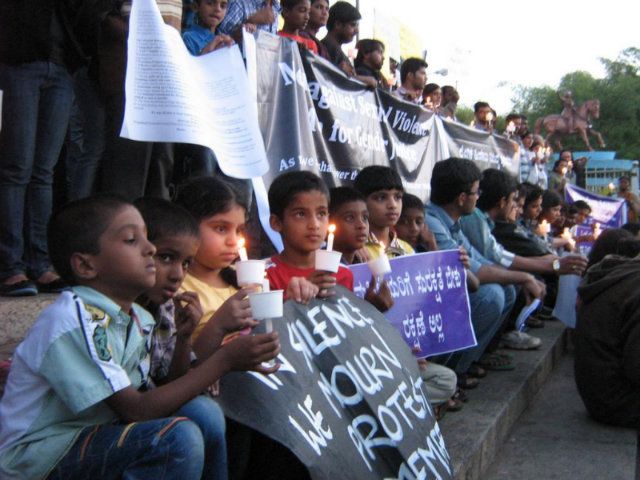
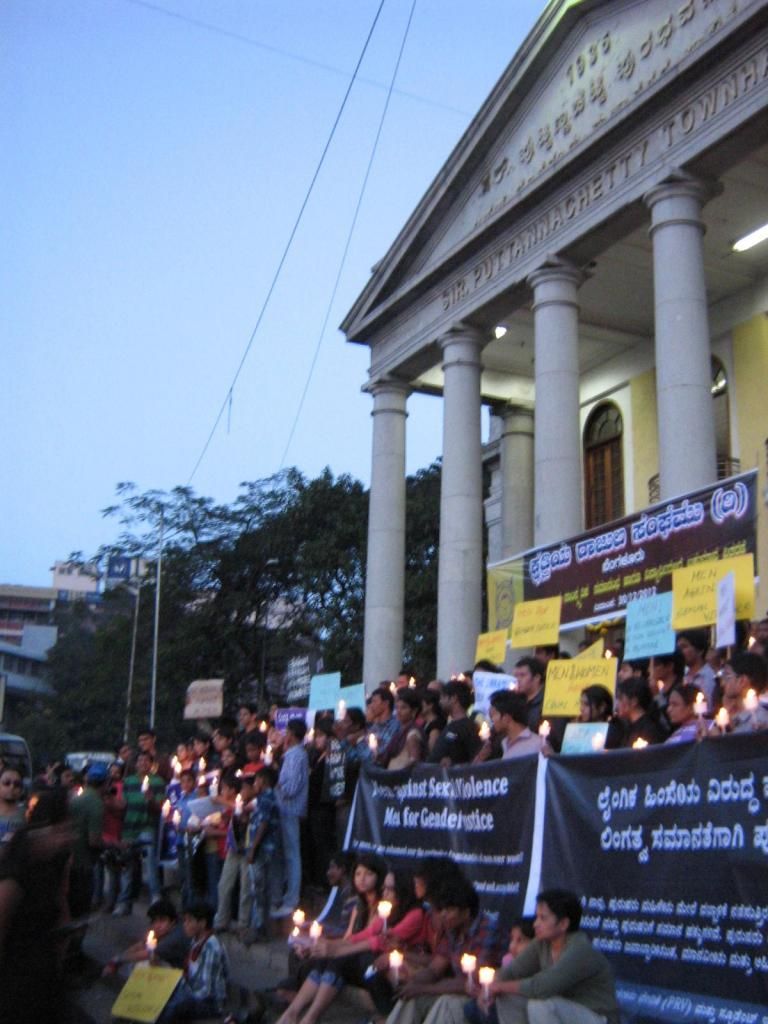
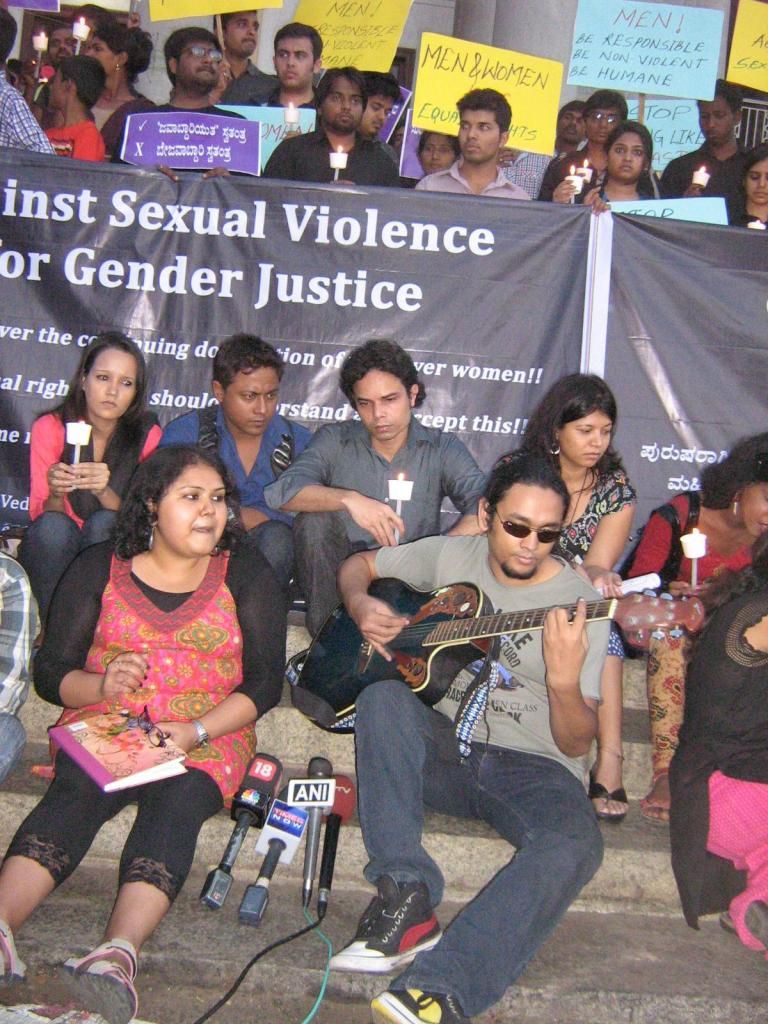
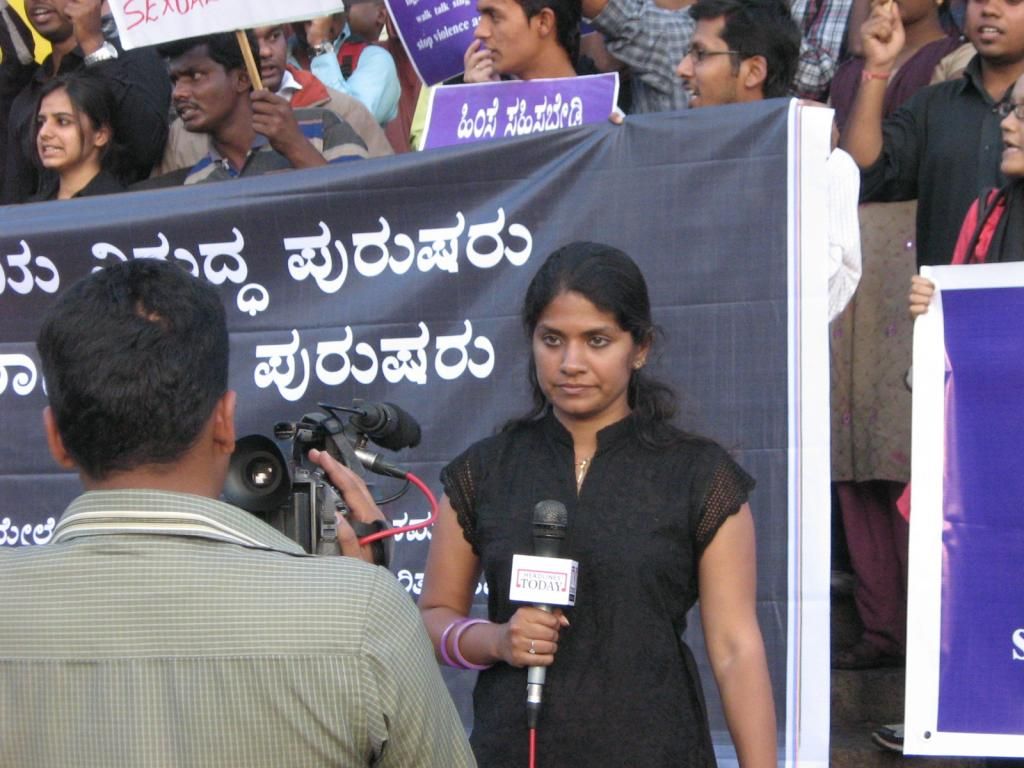
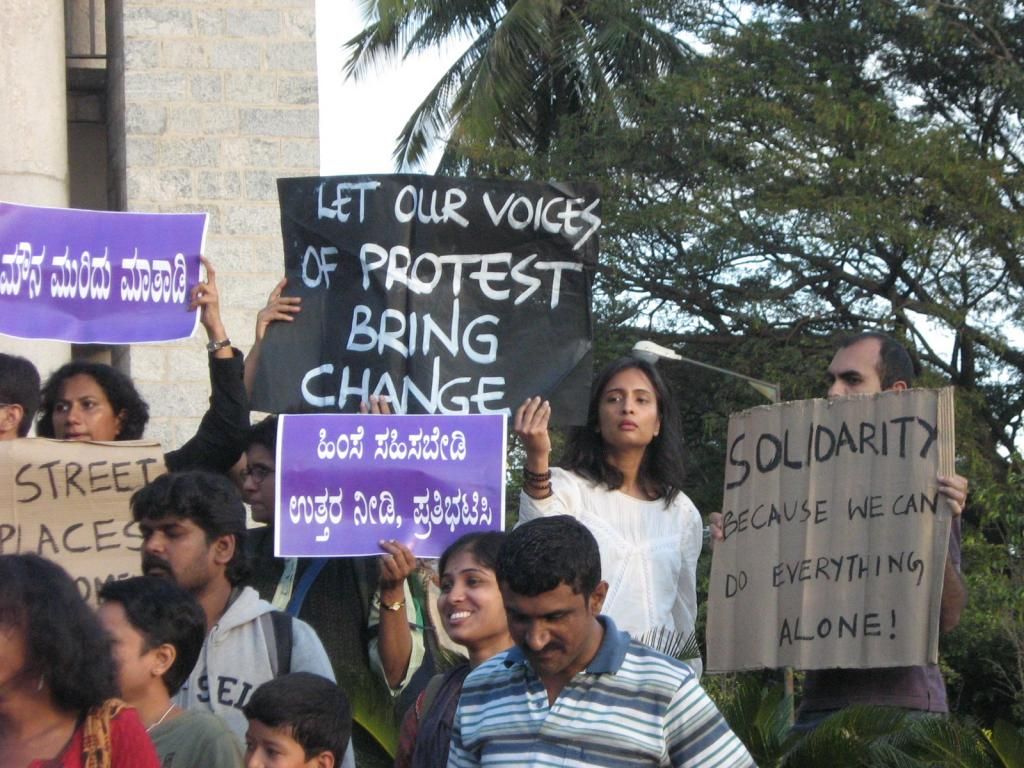
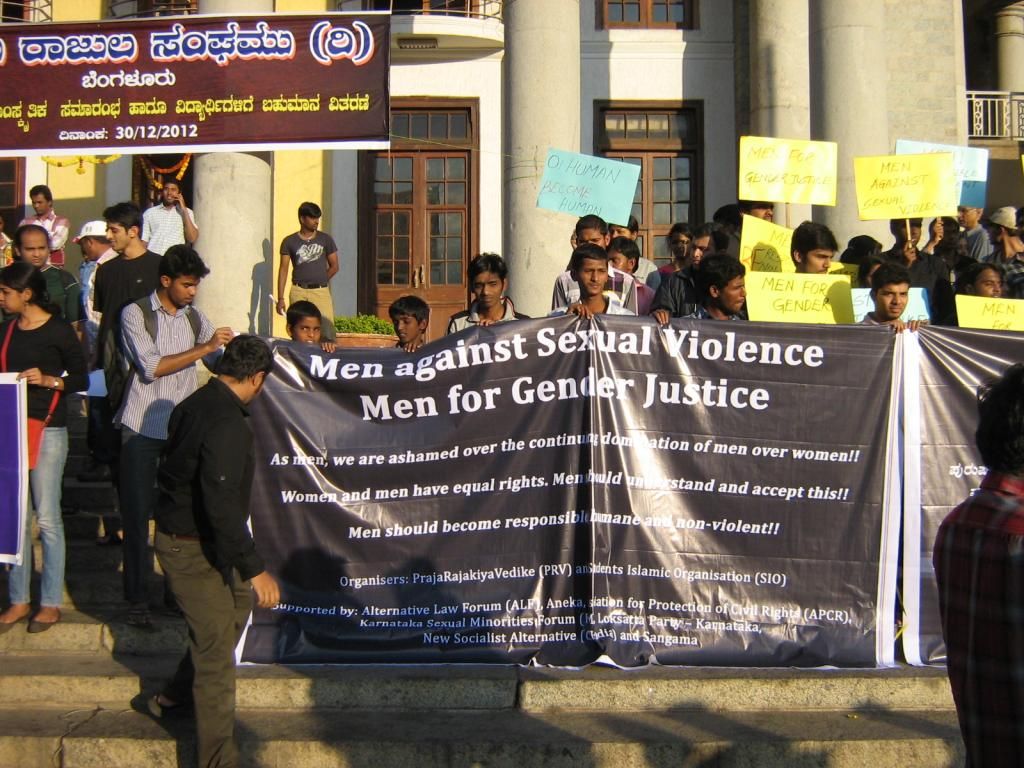
Today evening, in Bangalore, there was a silent protest and a candle light vigil at the Town Hall. It was heart warming to see a lot of men turning up. There were banners mentioning the Delhi gang rape and the 23-year old woman, whose death has shaken up our souls and there was at least one banner asking for the death of those responsible but there were also banners that asked for changes at the social level. Not capital punishment, not a new law but a change in ourselves — in how our society, and its men treat women.
I guess this was quite unlike the protests in Delhi, where they have been mostly attributing justice with the killing of those six men. I personally believe that though capital punishment may calm public’s anger over this heinous crime — it is social change that will eventually prove to be the catalyst for everlasting betterment of our lives.
Unless we ask for that social change, things may be the same. And for that change to happen, we may not even need to take the streets and blame the Government (as we have become used to doing it for sometime now). So the answers to most of the the evils that ail us may not be on the streets but in our own backyards. We just need to look.
Here are some of the pictures that best describe the emotional scenes there at the Town Hall.
(PS: My blog’s template does not allow big pictures to be displayed properly. You may please click on the pictures to see them in their entirety)
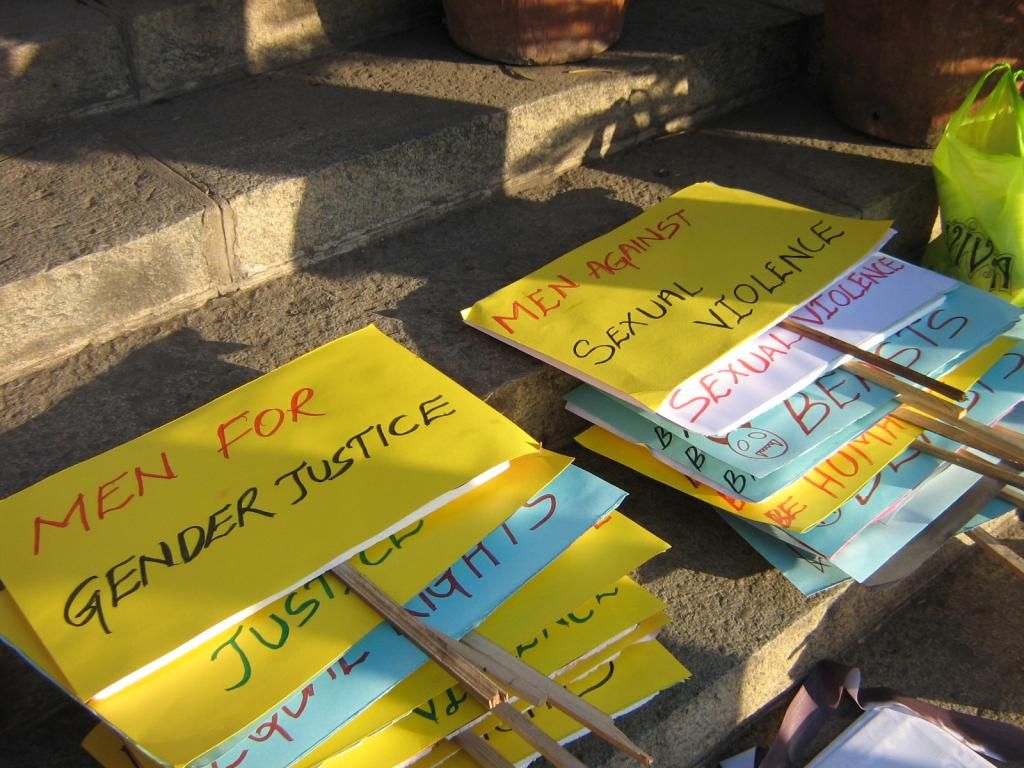
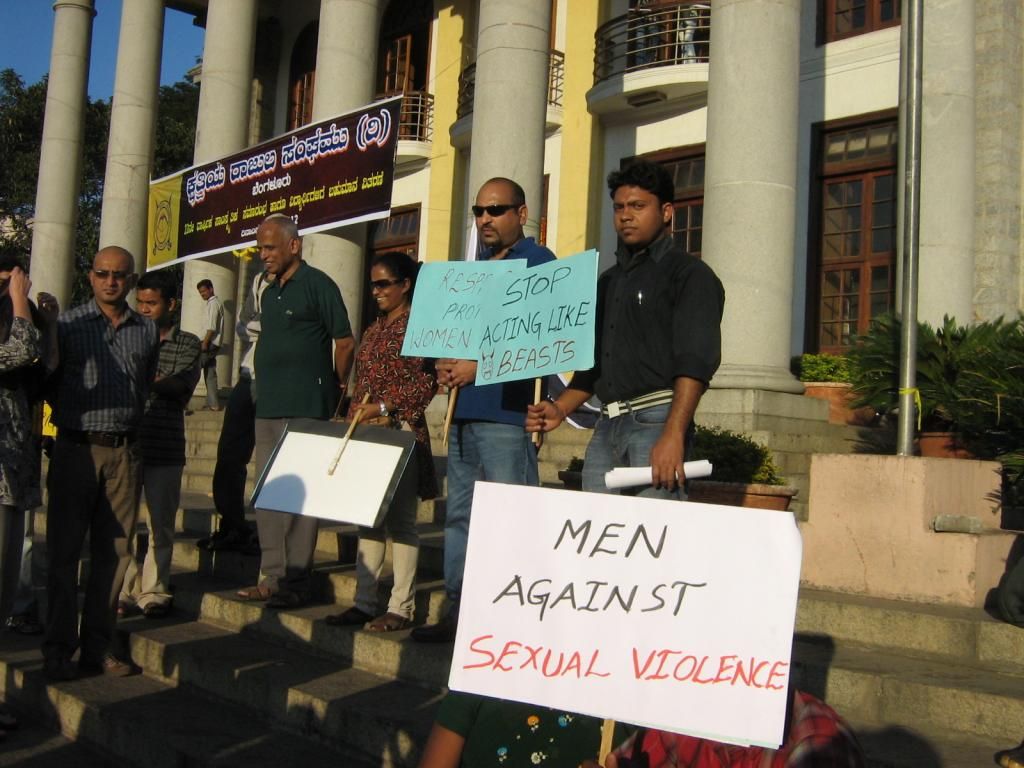
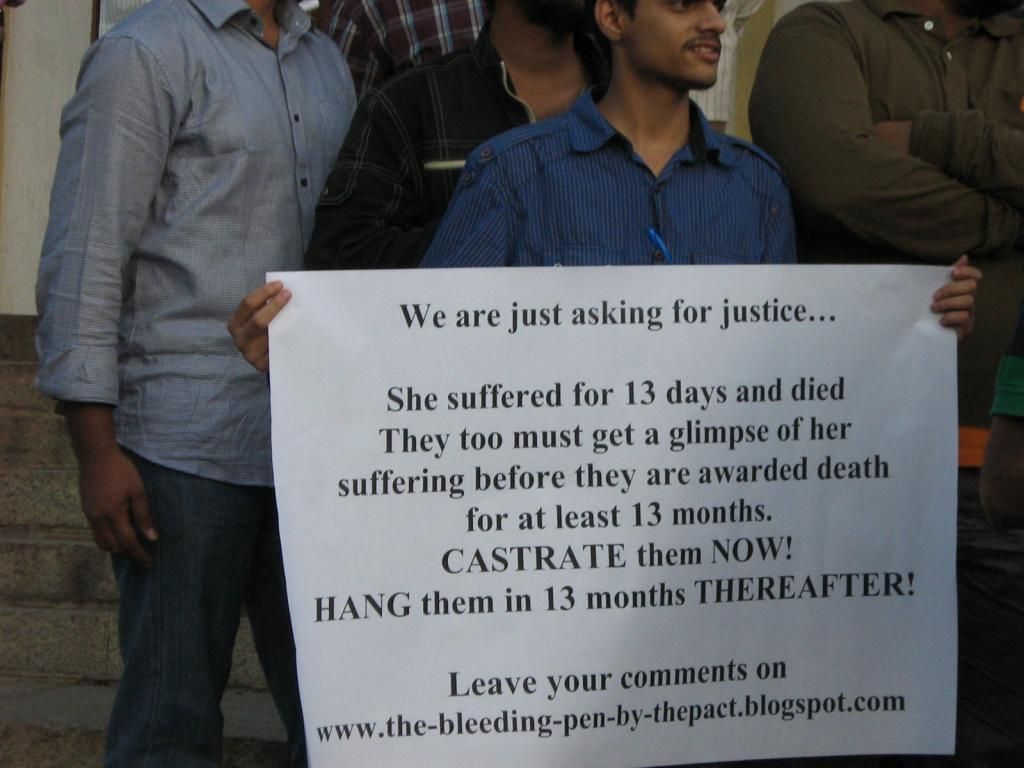
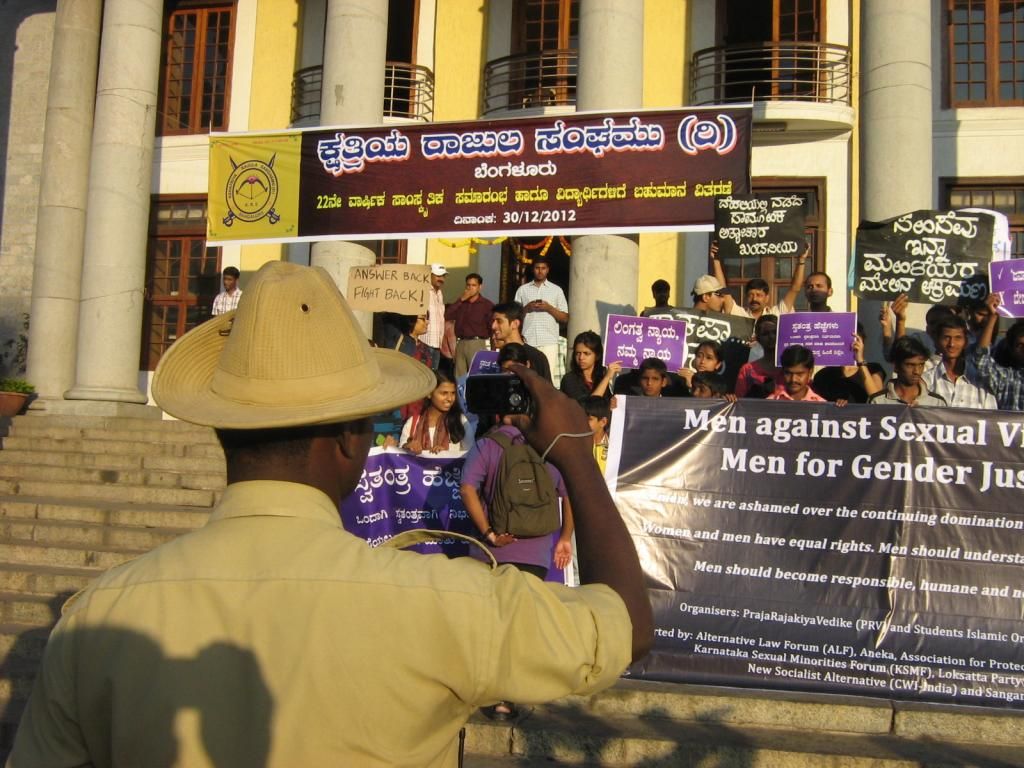
SMS Y to 5782711
Do you remember the time, not long ago, when people, at least here in Bangalore, formed human chains? When they had fancy stickers on the mudguard of their bikes, at the back of their cars, wearing black on a certain day while proclaiming their love and support for a man who they had never heard about ever before? Besides the things people did to show the support, there was one thing constantly making rounds: If you indeed supported him and really wanted the bill, his bill, to be made into a law, a piece of paper that could suddenly transform the times that we live in, for better or for worse only God can tell, you had to give a missed call. Yes. A missed call.
Anna Hazare asked the country for a missed call (A far cry from Subhas Bose’s demand for blood in return for freedom but hey, this is 2012). And we all obliged.
Hazare did something that no one in recent times could. Of all things, rekindled that fire, channeled that anger. We all had always thought that we deserve better politicians, now we were sure. But somewhere he also managed to create a beast out of the whole political system and made us believe that this external entity, this bad thing that could bite us all off, had to be tamed and put on a leash. We were our own heroes, the good guys. Those holding office, those ministers, the bad guys.
So we continued to live our lives as we always had. On one hand we put pictures of Hazare on our car bumpers and on the other we bribed traffic policemen, registrars, brokers and everyone else who could make our lives a little easier than standing in queues or visiting courts. But yes, we always were proud of supporting Hazare, our demand for that bill that most of us never bothered to discuss the internals of, forming human chains and giving missed calls.
And now we would be continuing our good deeds every sunday morning. Just like we believed Hazare would eradicate corruption, Aamir Khan has arrived with a bang to put a full stop to all social evils, one evil at a time, every week. The convenient time of a lazy sunday morning: all we would need is to press “Y” and send an sms — that’s it.
Did that just sound that I am against Satyameva Jayate? To many it did. Well, here’s my credo: I believe Anna Hazare and Aamir Khan have done all within their power to bring about a change. But I also believe that social evils can’t vanish when a celebrity hosts a tv show or writes a letter to a state’s chief minister.
I went about, asking people, about this change they were expecting. I was given many examples, quotes that startled me — like compared to America, there’s no incentive to be honest here. I have pondered on this for sometime but I can’t understand, why would someone need an incentive to be honest? And if that indeed holds good, lets say it has merit for we have an argument at stake, won’t you understand if your local politician comes up with a mini-scam?
And then there’s this golden excuse: Let them at the top change first. A top-down approach: The change for the good should begin at the top, why bother until then?
There will be many times in our lives when we are not on a couch and when it’s not a sunday morning, when we are not thinking of Aamir Khan that we’ll have two choices: one would be easy, all we would need to do is look the other way and the other would be tough, way out of our comfort zone. If for once, when we choose not to look the other way and take that tough call, we would have made an impact to our society in our own way.
So, Power to Aamir Khan and his show. But an “SMS Y to 5782711” will only take us so far.
The Traffic Slowers
I have been published by The Caravan Magazine. This month’s (February 2012) issue carries an article that I wrote for them. It’s a story about four guys, security guards in Bangalore’s Domlur area, who ferry passengers from one side of the road to another. I called the article, “The Traffic Slowers”, while Caravan preferred to name it, “At Their Own Risk”. No, I am not complaining.
You can check out the article here, at Caravan’s website.
It was a wonderful experience working with the people at Caravan. As an aspiring writer, this experience means a lot to me. Going around city, making notes, reworking my prose that could fit in Caravan’s style…
My sincere thanks to those at Caravan who I worked with. They know who they are. I hope you do read and enjoy my story, story of Das, Rajvir, Mohanty and Ranganatha’s, as much as I did while writing it.
Letter to the Editor
Past few months I have been writing to editors in various media houses for considering my writeups for publication. My experience of writing to editors goes a long way back, back in 2002. Those days I used to write crap. Nothing else.
My experience has been that most of the editors have this disdain against freelancers — it is understandable because many of these freelancers (including yours truly) are not trained writers. They are people from other vocations who love to write (and many among them write well). But if the editors feel that they’d rather communicate, be at peace and feel at home with their journalism school trained, “own” writers-at-large, that is perfectly understandable. What is not tolerable and justified is their indifferent attitude towards freelancers.
A possible explanation for this could be that editors must be getting emails by the ton from freelancers and most of the submitted work may not be even good enough to get published. Somewhere there, is it not possible that quality submissions might be getting lost? Because it is in the mud that the lotus is found. Because it is in the mire, that at times, beauty is witnessed.
Anyway. In the past 4 weeks, I had a mostly one way communication with the editor of one of the most admired journals in publication. I have nothing against this publication because quite simply, they find the best writers to write for them. My only problem with them is that there was hardly any communication from their end, despite my repeated attempts to contact them. As a freelancer and a part-time writer, I thought I deserved a little more respect. Maybe I expected more, but the editor I was talking to, as I had heard, was a messiah for freelancers. Maybe he did read my piece but if it did not fit in his magazine or if he thought that the writeup was utter crap (like I used to churn out regularly back in 2002), a one-liner polite email would have done wonders. Nothing happened. So, at the end of a 3 week wait, I found myself writing this email (below) to the editor. In retrospect, I thought, I could be writing this email to any editor because barring a few of them, I have largely found the editors to be an arrogant, egoistic lot.
Dear Editor,
This is my Fourth email to you, and overall I think this is the 7th attempt in writing to get your attention. I won’t go about giving you a background of my previous correspondence with you. Instead, I would like to let you know a little about myself.
I am 30 and have been working as a programmer for the last 8 years. At around the same time when I started programming, I also started blogging. Somewhere while blogging, I started to get inspired by various pieces of narrative journalism. After many years of blogging and evolving as a writer, things started picking up and I was one of the bloggers for Globalpost.com since their inception until a few months ago when they stopped the service. I was interviewed by the BBC last month in my capacity as a social blogger. Four months ago, I was published by tehelka magazine.
Here’s the thing — I have been emailing editors of various media houses in the last 3 months. I have sent my story to only a couple of them though (including you). I have also tried meeting an editor who made me wait 2 hours in his office but once his assistant came to know that I was a freelancer looking for writing opportunities, I was told to leave.
Anyway, at the end of the day, it is by writing computer code that I earn my bread and butter. I am not one of you, who earns by the word or who has been to journalism school. I am, an urban, middle-class Indian. I am the guy editors write about in their glossy colorful editorial pages. I am the guy that forms the demographic dividend that Nandan Nilekani so boastfully talked about in his bestseller, Imagining India. I am the guy cheated by the Government and written about (with a liberal helping of pity) by the intellectual editors. Though I may not agree with many of the claims that these intellects make on my behalf, I do not take away the right that I have given to you and people of your fraternity – to let you be the voice of the common man.
So, I just wonder why, when one of these voices that you claim to represent, comes to you with a story, is it treated with such disdain and indifference? So much so that this voice even does not find an acknowledgement from you, let alone an acceptance. How can the media be so cold? How can you be so cold?
My story and my request to you for considering it for publication stands withdrawn.
With that, I rest my case. Thank you.
Sincerely,
aditya kumar
Following Fish – Samanth Subramanian
While I was in US, sometime last year, I read about Samanth Subramanian’s Following Fish at rediff.com. A few months ago, I bought the book, read it and decided to write about it. It is not a review per se, though it can pass for one. Does not matter — here, below, is what I wrote.
While I was reading Samanth Subramaniam’s Following Fish, I made a promise to myself –that I would write about this book no matter what. I would write, no matter what little voice my blog had, no matter what difference it made to the already formed opinion, no matter those already published reviews by famous publications. It is because Samanth’s idea – of going around India’s coast and writing about it, deserves applause and attention.
Perhaps, it would be better not to look at Samanth’s book entirely through the lens of a travelogue. This is not a comprehensive account of what he encountered while travelling the corners of India’s coastline. It is not about places to visit and coastlines to see. Anyway, 184 pages can’t be enough for that. Neither it is about the hidden gems, those unassuming places, to eat the best fish in various small towns. It is about how one of the oldest practices known to mankind, fishing, transforms lives.
The author starts with the east coast: in Calcutta, a commentary on the much prized Hilsa. His trysts in the fish market, early morning in Calcutta. On the way down, he, well, swallows a fish in Hyderabad while scrutinizing the asthma medicine that thousands swallow in a fish. This moves all the way to west, to Gujarat where Samanth investigates the art of crafting fishing boats.
While in Kerala, the author goes toddy hunting — how could he not? I mean, it’s a place where the fish, varieties of gravies and fries notwithstanding takes a backseat and becomes a sidekick to toddy – that peculiar liquor from Palm trees that is best served, yes, before noon. So our author goes exploring toddy and describes the best way to locate an authentic toddy shop that serves, well, authentic toddy (also included in the chapter is a guide to pronounce the toddy “shop” right). Whatever happened to fish? We don’t care!
Honestly, having traveled extensively through the west coast myself, I waited patiently until the pages turned and I found Samanth Subramanian in Mangalore. And with a very similar dilemma that I had when I first went there. Where to find the best Mangalore fish curry? And this is this other thing about the book — if you are a fish eater you’d end up eating more fish over the weekends. This could be a longshot but perhaps it is that writer-reader relationship that builds over the course of the book and the fish loving reader finds it delightful than ever to eat fish – the love for seafood now validated and justified by the author of the book himself.
And there are points where Samanth keeps me longing for a little more: Mangalore, Bombay – points in case. Because while writing about his experience in Bombay, perhaps the most telling of all, he cautiously flirts with the political and social state of the city, asks important questions we all have asked before (and continue to ask) and then stops, almost abruptly. The chapter is a delight while it lasts.
But then disappointment — Writing about Goa, a place I relate to closely, was for me, Samanth’s falling. In Goa, the author tells a tale, almost silently weeping, of the sellout of the fishermen folk to the tourism industry. A tight slap to the administration of the state and his talks with a few passionate Goan anglers, Samanth truthfully tells a depressing story that many even in Goa would be surprised to hear. Why I call it his falling is because he surrenders to the grief, and in the process, forgoes enlightening the reader of the wonderful culinary experience that Goa could be. I mean, its a crime no less — the very center of the Konkan Cuisine, with strong influences left behind by the Portuguese, what an addition it could have been to the book. And Samanth, simply abandons the journey that Goa’s food could have been to the reader, silently absolving himself of it all. Surely, the author must have had his customary fish curry there? Why didn’t he tell us about it?
Ideally, I would have had the book by my side, while writing this. That didn’t happen. So all the underlined quotes, evidence of Samanth’s excellent prose and narration couldn’t be a part of this writeup. In fact, this all comes out from mental notes taken while reading the book almost a couple of months ago. It is not necessarily a bad thing — it has made sure that I present a well thought of, objective view.
And finally — This is a book that will delight you, involve you. For someone who refrained from eating fish in his childhood, Samanth Subramanian’s debut, Following Fish is his coming of age, a full circle. But perhaps more importantly, this book is also a coming of age for Indian narrative journalism. It is important that we acknowledge, appreciate and give credit where it’s due because this one here, it sets a high standard. Following Fish is a book that is admired while reading and it should inspire many similar quests.
PS: Take a look at flipkart’s page of ‘Following Fish’, here